Frontiers
Technology in VRT
Technology is widening VRT’s reach and precision — making exposure controllable, feedback quantitative, and home practice trackable — with restorative devices on the horizon.
Virtual reality
VR delivers immersive, reproducible, dose-controlled environments — busy streets, supermarket aisles, moving vehicles — for habituation and visual desensitisation. Motion speed, visual flow and task complexity are dialled to the patient’s threshold, and gamification boosts adherence, particularly in younger, tech-comfortable patients.1
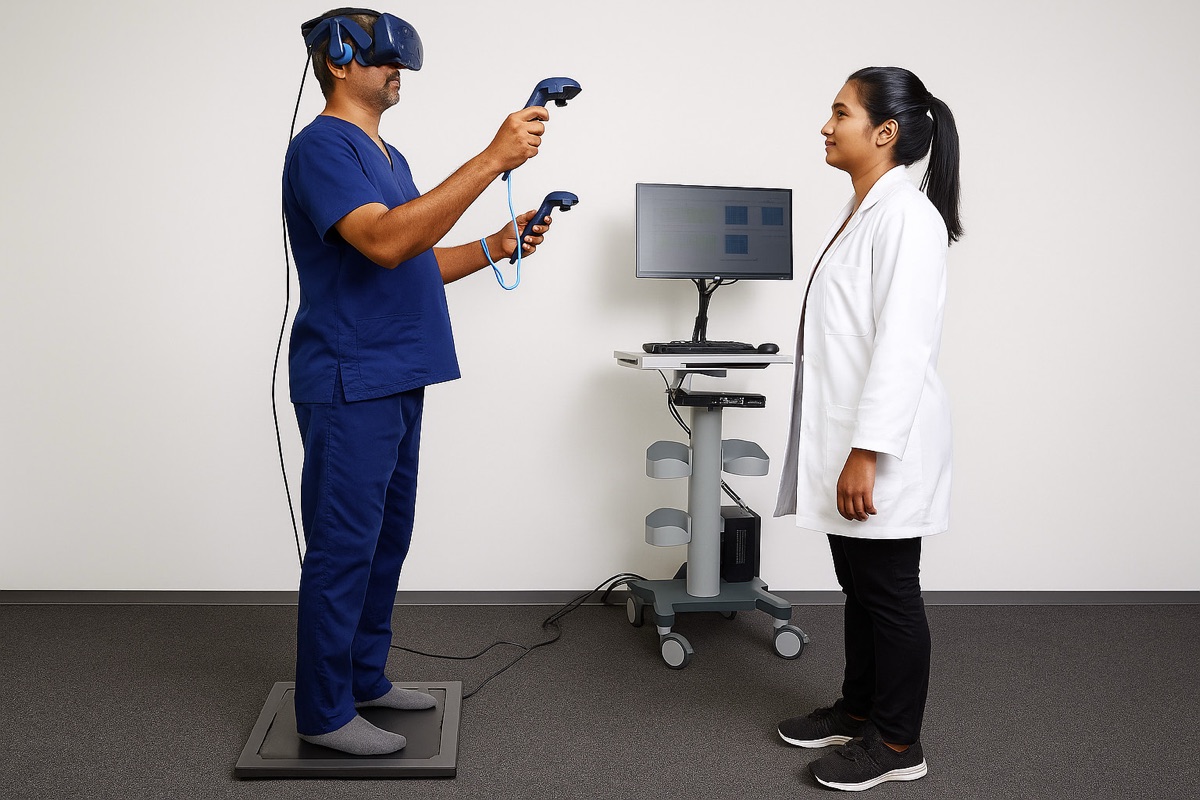
Posturography platforms
Beyond assessment, computerised dynamic posturography now supports interactive balance training: real-time visual or auditory feedback on sway and centre-of-pressure closes the loop, driving motor learning and sensory reweighting — useful in instability and bilateral loss, and to quantify outcomes over time.2 See the Posturography chapter for the testing detail.
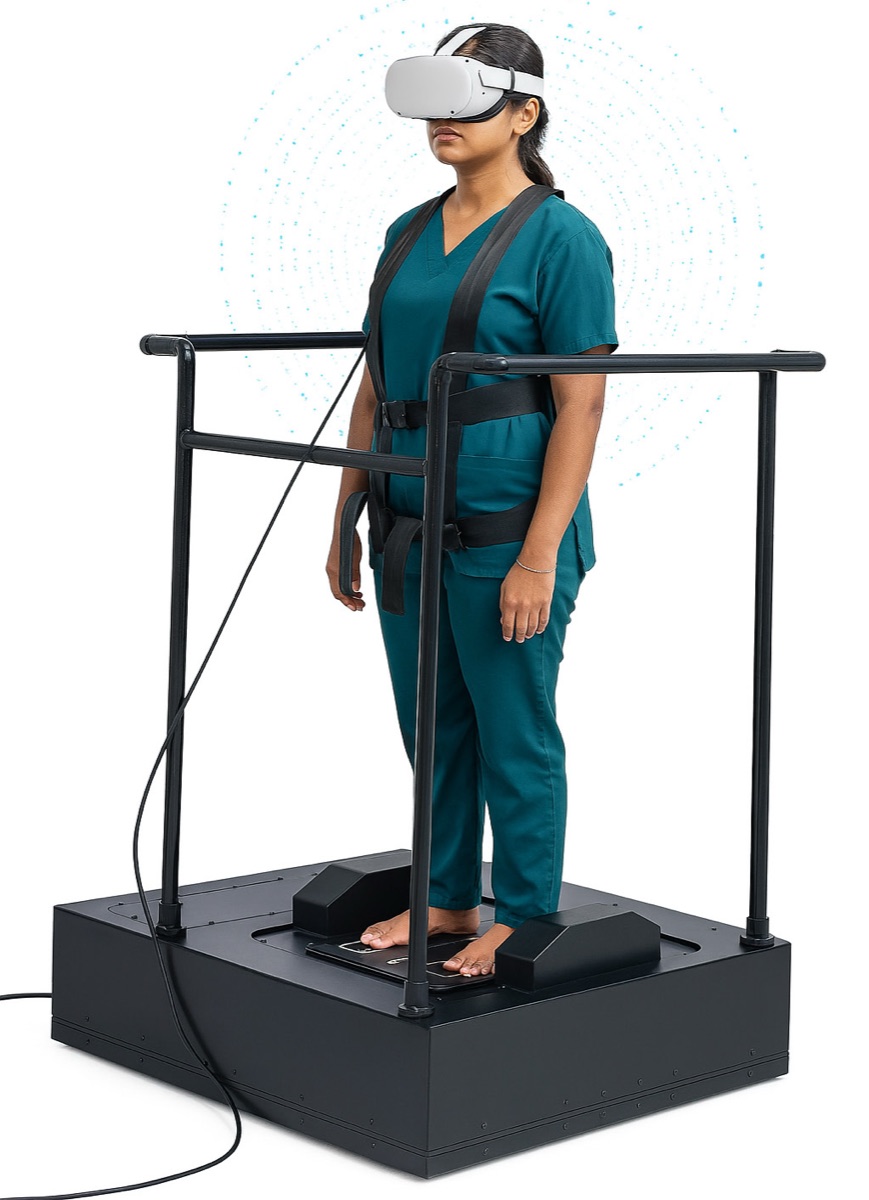
mHealth & tele-rehabilitation
Mobile apps deliver structured routines, reminders, instructional video and digital symptom diaries, while wearable or built-in sensors capture movement quality and sway objectively. These extend access — valuable in rural or underserved settings — and for several conditions tele-rehabilitation achieves outcomes on par with in-person care.3
The vestibular implant frontier
Conceptually akin to the cochlear implant, the vestibular implant delivers targeted electrical stimulation to the canals or vestibular nerve to mimic natural input. Early trials show partial restoration of VOR function, dynamic visual acuity and balance in profound bilateral loss — still experimental, but a compelling vision for patients with otherwise untreatable deficits.4
Key points
- VR gives controllable, engaging exposure for habituation and visual desensitisation.
- Feedback-based posturography turns a diagnostic tool into a balance trainer.
- mHealth and tele-rehab extend access and can match in-person outcomes.
- Vestibular implants aim to restore function in severe bilateral loss — still experimental.